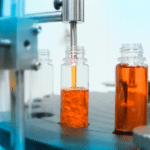
In 2026, automation is no longer an option for French SMEs: it has become an essential strategic lever. The packaging industry perfectly illustrates this transformation. Whether it involves filling machines, capping machines, labelling machines or monobloc systems, automated equipment now makes it possible to optimise production, reduce errors and improve product quality.
But why this acceleration in 2026? What factors are driving SMEs to invest heavily in automation? And what tangible benefits can be expected?
Economic pressure is driving automation
The current economic environment is pushing SMEs to improve efficiency. Inflation, rising production costs, pressure on margins: all these challenges force companies to optimise every stage of their value chain.
Automation provides a direct response to these challenges. By reducing manual tasks and human error, it lowers operating costs. Some studies even show that SMEs can reduce their operating costs by more than 20% through process automation.
In the packaging sector, this results in:
- Overall optimisation of production performance
- Reduction in losses and non-conformities
- Improved consistency and product quality
- Standardisation of processes at every stage
Automated packaging equipment, whether for filling, capping or labelling, enables SMEs to increase productivity while keeping operating costs under control.
Labour shortages are accelerating the transition
The lack of skilled labour has become a major constraint for industrial SMEs. In 2026, this issue is intensifying, particularly in production roles.
Automation therefore emerges as a concrete solution:
- Reduced dependence on recruitment
- Improved production continuity
- Reduction of repetitive tasks
In this context, automated packaging machines make it possible to:
- Refocus teams on supervision and quality
- Improve working conditions
For example, an automatic capping machine ensures consistent tightening without human effort, reducing fatigue and the risk of errors.
More accessible and higher-performance technologies
If automation is growing so rapidly in 2026, it is also thanks to simplified machine usability.
Packaging solutions developed by CDA’s R&D team offer, for example:
- Quick adjustments for different formats
- Excellent cleanability
- Adaptability to a wide range of productions and industry requirements
- Simplified maintenance, whether preventive or corrective, thanks to CDS services and tailored training
In packaging, this translates into versatile equipment such as monobloc systems, which combine several functions within a single machine.
Increasing customer expectations
Consumers and distributors now demand:
- Perfectly packaged products
- Flawless traceability
- Short delivery times
In this context, automation becomes a competitive advantage, and CDA offers a wide range of filling, capping, labelling machines and complete lines that enable full process automation, from production to logistics, thanks to complementary solutions. These solutions allow SMEs to increase their production capacity without increasing headcount.
Rapid return on investment
Contrary to popular belief, automation is now accessible to SMEs, with a rapid return on investment.
The benefits are numerous:
- Cost reduction
- Increased productivity
- Improved quality
In 2026, automation is establishing itself as a pillar of competitiveness for French SMEs. In the packaging sector, it reconciles performance, quality and profitability. Filling machines, capping machines, labelling machines and monobloc systems are no longer just equipment: they are strategic tools for growth.
Would you like to automate your packaging line? CDA experts can support you in choosing equipment suited to your production.
FAQ
Why are SMEs investing in automation in 2026?
Because it reduces costs, increases productivity and meets market demands.
What equipment is most commonly used in packaging?
Filling machines, capping machines, labelling machines and monobloc systems are the most common solutions.
Is automation profitable for SMEs?
Yes, the return on investment is often quick thanks to productivity gains and reduced errors.
Is an automated line flexible?
Yes, modern machines adapt to different formats and product types.